
4560 Eastgate Pkwy

Mississauga, ON.

1-888-331-3305

416-559-SOLR (7657)

China Top Residential Solar Panel Suppliers?

China has become a major manufacturing center for residential solar equipment, supplying panels to installers and homeowners worldwide. However, identifying the top residential solar suppliers requires more than comparing wattage or online prices. Factory scale matters, but so do field reliability, product testing, warranty support, and transparent business practices.

As solar analyst Jenny Chase has said, “Solar is now the cheapest source of electricity in history.” That advantage is meaningful only when the system performs safely for many years. Leading Chinese manufacturers such as LONGi, JinkoSolar, Trina Solar, and JA Solar are often evaluated for efficiency, degradation rates, production capacity, and global certifications. Their panels may look similar on a rooftop, yet small differences can affect energy yield in shaded conditions, hot climates, or limited roof spaces.

Details matter.

A dependable supplier should publish clear warranty terms and provide traceable product information. Buyers should also check compatibility with inverters, mounting systems, batteries, and local grid requirements. An impressive laboratory rating does not always guarantee excellent installation results. Dust, poor ventilation, weak wiring, and careless design can reduce output quickly.

This guide compares China’s leading residential solar suppliers through practical criteria, not promotional claims alone. It considers real homeowner concerns, including long-term service, installer confidence, and replacement procedures. No ranking is permanent. Manufacturing quality can change, and even respected brands may receive uneven feedback across markets. That is an uncomfortable limitation, but it deserves attention. The best supplier is not automatically the cheapest or the biggest; it is the one that fits the project, climate, budget, and support expectations.

China Top Residential Solar Panel Suppliers?

What Defines a Leading Residential Solar Panel Supplier in China?

A leading residential solar panel supplier in China must prove more than factory capacity. China’s National Energy Administration reported 216.9 GW of new solar capacity in 2023. That scale creates strong manufacturing experience, but it also makes supplier selection harder. Buyers should request traceable cell origins, production dates, and independent test records. IEC 61215 and IEC 61730 certification should be verified through recognized laboratories, not copied from sales brochures.

Performance data matters at the rooftop. The IEA PVPS Trends 2024 report recorded about 456 GW of global solar additions in 2023, increasing pressure on manufacturers to deliver reliable modules quickly. A capable supplier should explain temperature coefficients, low-light output, potential-induced degradation testing, and mechanical-load results. NREL’s photovoltaic degradation research commonly reports a median annual degradation near 0.5% for crystalline silicon modules. However, that figure is not a promise for every installation. Heat, salt mist, shading, and poor mounting can change the result.

Commercial reliability also defines leadership. Suppliers should provide clear product warranties, serial-number tracking, spare-part policies, and realistic delivery schedules. Packaging should protect glass corners during container transport. Factory audits help, but they are not perfect. I have seen impressive production lines hide weak after-sales processes. A serious supplier therefore shares failure data, not only efficiency records, and supports inverter compatibility checks before shipment. That practical honesty is easy to overlook.

Major Chinese Suppliers Serving the Residential Solar Market

China’s residential solar suppliers now serve installers across Europe, Asia, Australia, and emerging markets. Their strength is manufacturing scale, dense component networks, and fast technology adoption. The IEA PVPS Trends 2024 report recorded about 216.9 GW of new solar capacity in China during 2023. That scale supports competitive module pricing, although household buyers still face shipping, certification, and after-sales costs.

Major Chinese suppliers typically offer n-type TOPCon, heterojunction, and glass-glass modules for rooftop projects. Many also coordinate with inverter, battery, and monitoring manufacturers, creating complete residential systems. SolarPower Europe’s Global Market Outlook 2024-2028 expects distributed solar to remain important as electricity prices and energy security concerns influence homeowners. Small roofs need careful design. A high-efficiency module can produce more power within limited space, but temperature, shading, roof direction, and local snow loads still matter.

Quality is not identical across factories. That matters. Buyers should review IEC test reports, factory audits, degradation warranties, and independent performance data. The IEA’s Renewables 2024 analysis also highlights continuing growth in distributed generation, while noting grid integration challenges. Chinese suppliers can provide strong value, yet product selection should not rely on price alone. A cheaper module may create hidden expenses through weaker documentation, slower warranty response, or unsuitable electrical specifications. Procurement teams should verify certification for the destination market and request recent third-party testing before placing large residential orders.

China Top Residential Solar Panel Suppliers? - Major Chinese Suppliers Serving the Residential Solar Market

Supplier Category Typical Residential Product Portfolio Typical Module Power Typical Module Efficiency Product Warranty Performance Warranty Common Certifications Residential Market Coverage Best-Fit Application
Large integrated module manufacturers Monocrystalline PERC, TOPCon and back-contact modules; often supplied through authorized distributors and installers 400–620 W 20%–23.5% 12–25 years 25–30 years IEC 61215, IEC 61730, ISO 9001; regional marks may include CE, UL or TÜV certification China, Europe, Asia-Pacific, the Middle East, Africa and the Americas Mainstream rooftop systems requiring bankable products and broad installer support
High-efficiency residential module specialists High-density TOPCon, back-contact and compact rooftop modules designed for limited roof area 400–550 W 21%–24% 15–25 years 25–30 years IEC 61215, IEC 61730 and applicable local electrical safety certifications Strong presence in space-constrained urban and suburban rooftop markets Small roofs, premium residential installations and systems seeking higher energy yield per square metre
Value-oriented module manufacturers Standard monocrystalline modules with balanced power output, availability and cost 400–580 W 19.5%–22.5% 12–15 years 25–30 years IEC 61215 and IEC 61730; additional country-specific approvals depend on the destination market China, Southeast Asia, Africa, Latin America and selected European markets Cost-sensitive household systems and standard pitched-roof installations
Flexible and lightweight solar manufacturers Lightweight glass-glass, flexible or low-load modules for roofs with structural limitations 100–450 W 15%–22% 5–15 years 20–25 years Relevant IEC standards, fire-resistance testing and structural or adhesive testing where required Specialized projects in Asia-Pacific, Europe, North America and off-grid markets Metal roofs, lightweight structures, balconies, façades and roofs with limited load capacity
Residential solar-plus-storage solution providers PV modules combined with hybrid inverters, lithium-iron-phosphate batteries, monitoring and energy-management systems 400–620 W 20%–23.5% 10–15 years for modules and electronics 25–30 years for modules IEC 61215, IEC 61730, IEC 62109, IEC 62619 and grid-connection certifications as applicable China, Europe, Australia, Southeast Asia, South Africa and other distributed-energy markets Homes requiring backup power, self-consumption optimization or time-of-use energy management
OEM and private-label residential suppliers Custom-labelled modules, packaging, documentation and electrical configurations for distributors and installers 400–620 W 19.5%–23.5% 10–15 years 25–30 years IEC 61215, IEC 61730 and destination-market approvals specified in the purchase contract Primarily export-oriented, serving regional distributors, EPC contractors and installer networks Distributors seeking customized branding, packaging, minimum-order flexibility or project-specific specifications
Data note: The figures shown are representative market ranges for Chinese residential-solar suppliers and product categories. Actual specifications, certifications, warranty terms, minimum order quantities and export eligibility should be confirmed against the supplier’s current technical datasheet and written warranty.

Key Solar Panel Technologies and Product Features

China’s residential solar panel suppliers increasingly offer TOPCon, HJT, and back-contact technologies. IEA PVPS Trends 2024 reports that global photovoltaic additions exceeded 400 GW in 2023. This rapid expansion has pushed suppliers toward higher efficiency and tighter quality control.

TOPCon panels commonly deliver around 22% to 23% module efficiency. HJT modules can perform well in hot conditions because of their lower temperature coefficient. Back-contact designs place electrical connections behind the cells, creating a cleaner front surface and stronger roof coverage. The Fraunhofer ISE Photovoltaics Report 2024 records commercial module efficiencies above 24% in leading production categories. However, laboratory performance is not the same as a shaded rooftop.

Look closely at product details. Bifacial cells can capture reflected light, but their value depends on roof color, spacing, and mounting height. Glass-glass construction may improve moisture resistance, while adding weight. A low annual degradation rate matters more than a dramatic efficiency claim. Independent testing should cover damp heat, thermal cycling, mechanical load, and potential-induced degradation under IEC standards. Suppliers should also provide traceable factory records, clear warranty terms, and realistic temperature data.

Small roofs need careful electrical planning. A panel with excellent output may still perform poorly under chimney shadows. I have seen specifications hide this weakness. Procurement teams should compare measured operating data, not only brochure ratings. Supplier transparency remains uneven, and that deserves attention.

How to Compare Suppliers, Certifications, and Warranty Terms

China Top Residential Solar Panel Suppliers?

Comparing residential solar panel suppliers requires more than checking price per watt. Ask for current certificates covering IEC 61215 and IEC 61730 safety and performance requirements. Verify certificate numbers through the issuing laboratory, not only a supplier’s PDF. Factory quality systems, such as ISO 9001, can support consistency, but they do not replace product testing. Request production dates, bill-of-material details, and traceability for each shipment.

A reliable supplier should explain its inspection process clearly. Ask whether every panel receives electroluminescence testing, visual checks, and insulation testing. Independent pre-shipment inspections can reveal cracked cells, poor soldering, or damaged frames. Review several samples, because one attractive panel proves little. Production capacity also matters. A supplier may offer excellent samples but struggle during peak seasons. That gap is easy to miss.

Warranty language needs close reading. Separate the product warranty from the performance warranty. Check coverage for delamination, junction-box failure, frame corrosion, and early power loss. Confirm who pays labor, transport, and replacement costs. Ask how claims are filed and which law applies to the agreement. Some terms sound generous but exclude installation errors, salt exposure, or unauthorized repairs. Transferability may matter when selling the home. A spreadsheet helps, though it can create false confidence. Visit the factory when possible, inspect records, and speak with recent residential buyers. Mistakes still happen. The goal is to make them expensive and less likely.
Choosing the Right Chinese Supplier for Residential Solar Projects

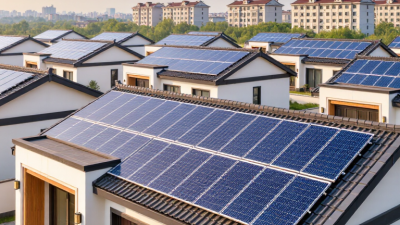
Choosing a Chinese supplier for residential solar projects requires more than comparing module prices. IEA’s Renewables 2024 report states that solar PV represented about three-quarters of global renewable capacity additions in 2023. This rapid growth increases supply options, but it also makes quality screening essential. Ask for factory audit records, production capacity, ownership details, and shipment history. A polished website proves little.

Request independent test evidence for IEC 61215 and IEC 61730 compliance. Check degradation data, temperature coefficients, PID resistance, and mechanical-load performance. For coastal homes, review salt-mist testing. For rooftop systems, compare fire classification and installation compatibility. IEA PVPS reports continued expansion in distributed solar markets, where shading, roof structure, and local grid rules strongly affect output. A module that performs well in a laboratory may underperform beside a chimney.

I would also examine warranty wording carefully. Confirm who handles claims, where replacement stock is held, and how serial numbers are traced. Request samples from normal production, not specially selected units. Then compare flash-test results across several batches. Small differences matter. Less than 5 percent is better. Price still matters, but unexplained discounts deserve questions. Supplier evaluations can be imperfect because published reports may lag factory changes. An on-site audit, third-party inspection, and a small pilot order can expose weaknesses before a full residential deployment.