What Is a Solar Power System and How Does It Work?
A solar power system converts sunlight into usable electricity for homes, businesses, and remote facilities. At its center are photovoltaic panels, which produce direct current when sunlight reaches their semiconductor cells. An inverter then changes that electricity into alternating current for appliances, lighting, and equipment. The sun provides the input. The system manages the rest.
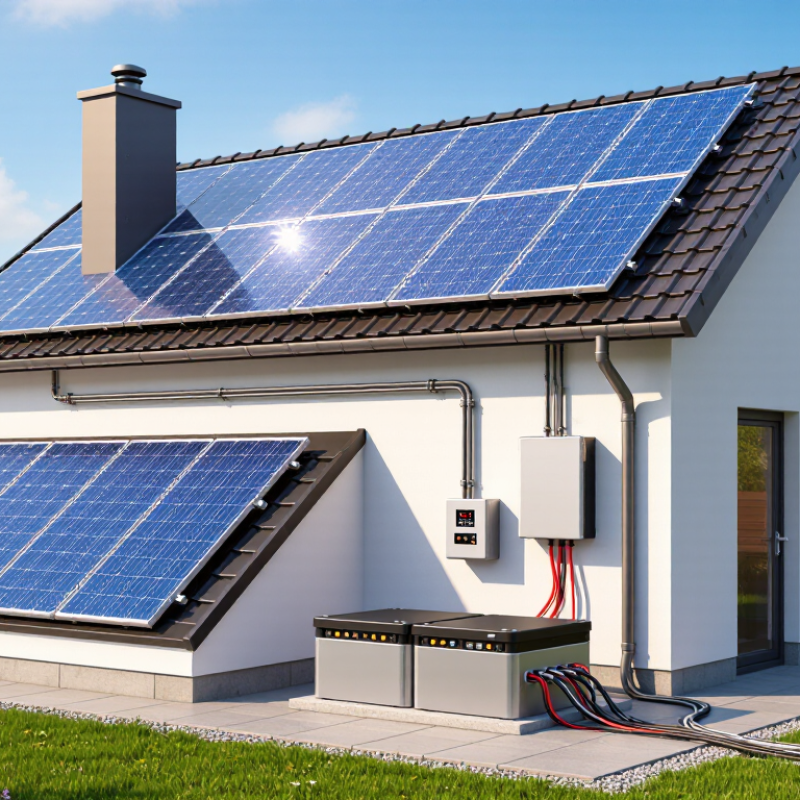
A complete setup may also include mounting rails, wiring, safety switches, monitoring software, and a battery. During a bright afternoon, panels might power a refrigerator while sending extra energy into storage or the electrical grid. At night, a battery can supply selected circuits, depending on its capacity and control settings. A utility-connected system may use a meter to track electricity flowing in both directions.
Understanding the equipment matters more than memorizing attractive efficiency claims. Panel output changes with shade, roof direction, temperature, dust, and seasonal sunlight. A shaded chimney can reduce production across part of an array, even when the remaining panels look bright. Professional installers usually examine the roof, electrical service, local climate, and expected energy demand before recommending equipment. Their assessment should include realistic production estimates, maintenance needs, warranties, and safe shutdown procedures.
It sounds simple. Reality is messier.
This guide explains how each component works and how they operate together. It also considers practical limits, including cloudy weather, battery degradation, installation costs, and grid dependence. Some examples use typical household conditions, not guaranteed results. Your property may perform differently, so careful design and qualified electrical advice remain essential.
Solar Energy Fundamentals: 1,361 W/m² at the Top of Earth’s Atmosphere
What Is a Solar Power System and How Does It Work?
Solar energy begins with a useful reference point: about 1,361 watts reach each square meter at the top of Earth’s atmosphere. This value is called solar irradiance, or the solar constant. It is measured on a surface facing the Sun’s rays directly, not on a typical rooftop. The value also changes slightly with Earth’s orbital position.
The atmosphere reduces this incoming energy through absorption, scattering, and reflection. Clouds can reduce it sharply. Sunlight also arrives at different angles during the day. A panel therefore receives much less than 1,361 W/m² in ordinary conditions. This distinction matters when estimating electricity production. A clear noon sky may still produce less energy than a laboratory calculation suggests.
A solar power system uses photovoltaic cells to convert light into direct-current electricity. An inverter changes that electricity into alternating current for household appliances. Batteries can store surplus power, while a meter records energy moving to or from the grid. Panel direction, tilt, temperature, dust, and partial shade all affect output. Even a small shadow across one section can reduce production more than expected. A practical assessment should use local irradiance data, roof measurements, and seasonal shading checks. Calculations are valuable, but they are not the whole installation. Real roofs are rarely perfect.
Photovoltaic Modules: How 15–23% Efficiency Converts Light into DC Power
What Is a Solar Power System and How Does It Work?
Photovoltaic Modules: How 15–23% Efficiency Converts Light into DC Power
A solar power system begins with photovoltaic modules, which use semiconductor cells to capture sunlight. Photons transfer energy to electrons, creating direct current, or DC electricity. Under standard test conditions, sunlight provides about 1,000 watts per square metre. A module with 20% efficiency can therefore produce nearly 200 watts per square metre. The result changes with temperature, shading, dust, roof angle, and cable losses.
Fraunhofer ISE’s Photovoltaics Report 2024 places many commercial crystalline-silicon modules near 20–23% efficiency. Older or lower-cost designs commonly operate around 15–18%. This difference appears physically: a 400-watt module may require roughly two square metres at strong test conditions. However, real rooftops rarely match laboratory settings. Heat usually reduces output, and a small shadow can affect several connected cells. Efficiency is useful, but it is not the same as daily energy production.
Tips: Check the module’s temperature coefficient, not only its headline efficiency. Ask for measured annual yield estimates using local sunlight data. IEA PVPS reported about 456 gigawatts of new photovoltaic capacity worldwide in 2023, showing rapid deployment, yet installation quality still matters. A poorly ventilated array may underperform. I have found that simple monitoring often reveals overlooked losses, such as morning shading or loose connections. The numbers look clean. Rooftops are not.
Photovoltaic Module Efficiency and DC Power Output
Under standard test conditions of 1,000 W/m² solar irradiance, a 1 m² photovoltaic module converts 15–23% of incoming sunlight into approximately 150–230 W of direct-current (DC) power.
Inverters and Power Flow: Why 95–99% Conversion Efficiency Matters
A solar power system turns sunlight into usable electricity through several controlled stages. Solar panels produce direct current, or DC, on the roof. Cables carry that DC to an inverter near the switchboard. The inverter uses electronic switching to create alternating current, or AC, for household appliances. It also tracks panel voltage and current as sunlight changes. Simple in appearance.
Conversion efficiency shows how much incoming DC survives as usable AC. Modern inverters often operate around 95–99% under stated test conditions. A 98% efficient inverter loses about 100 watts when processing 5,000 watts. That lost energy becomes heat inside the unit. Across five strong sun hours, the difference can approach 0.5 kilowatt-hours. A 95% unit would lose roughly 250 watts at the same output. Small percentages matter.
But rated efficiency is not the whole story. Real performance changes with load, temperature, cable resistance, dust, and standby consumption. An inverter may reach 99% near its ideal range, then perform less efficiently early in the morning. A qualified technician should compare datasheet values with measured AC output. Good monitoring can expose clipping, unusual heat, or night-time draw. The calculation is useful, yet imperfect. Safe installation still requires local electrical checks and careful testing.
What Is a Solar Power System and How Does It Work? — Inverters and Power Flow: Why 95–99% Conversion Efficiency Matters
| System Stage |
Power Form |
Primary Function |
Typical Efficiency or Loss |
Power-Flow Consideration |
| Solar Array |
Sunlight → DC electricity |
Photovoltaic cells generate direct current from sunlight. |
Module efficiency is commonly about 18–23% under standard test conditions. |
Output varies with sunlight, temperature, shading, orientation, and soiling. |
| DC Wiring and Protection |
DC |
Combines array circuits and safely delivers DC power to the inverter. |
Well-designed systems generally limit cable and connection losses to about 1–3%. |
Long cable runs, undersized conductors, and loose connections increase voltage drop. |
| MPPT Control |
DC → optimized DC operating point |
Tracks the array’s maximum power point as irradiance and temperature change. |
MPPT tracking efficiency is commonly around 98–99%. |
Effective tracking helps prevent available solar power from being lost when conditions change. |
| Inverter |
DC → AC |
Converts variable DC electricity into grid-compatible alternating current. |
Approximately 95–99%, depending on load level and operating conditions. |
A 98% conversion efficiency means about 2% of the DC input is lost as heat and operating power. |
| AC Distribution |
AC |
Routes electricity to household loads, a battery system, or the utility grid. |
Distribution losses are often kept near 1–3% with suitable conductors and distances. |
Local loads normally receive solar power first when generation is available. |
| Battery Storage |
DC or AC, depending on system design |
Stores surplus energy and supplies power when solar production is insufficient. |
Typical battery round-trip efficiency is approximately 85–95%. |
Additional inverter and control losses may apply in AC-coupled systems. |
| Household Loads or Grid Export |
AC |
Uses solar electricity on-site or sends surplus electricity to the grid. |
No major conversion loss occurs at the load itself, although appliances consume energy. |
When demand exceeds solar output, electricity is imported from storage or the grid. |
|
Key takeaway: Inverter efficiency directly affects usable energy. At 95% efficiency, 5% of the DC input is lost during conversion; at 99% efficiency, the conversion loss is about 1%. Actual performance depends on load level, temperature, wiring, shading, system configuration, and maintenance.
|
Solar System Sizing: A 1 kW Array Can Generate 1,000–1,500 kWh Annually
What Is a Solar Power System and How Does It Work?
A solar power system converts sunlight into electricity for homes, farms, or small businesses. Solar panels produce direct current, while an inverter changes it into usable alternating current. A typical system may also include mounting rails, cables, safety switches, and a battery.
Solar system sizing begins with the array’s rated capacity. A 1 kW array can generate about 1,000–1,500 kWh annually in suitable conditions. This range is not a promise. Local sunlight, roof direction, panel angle, temperature, dust, and shading all affect production. A south-facing roof may perform well in one region, while another location needs a different orientation.
Small details matter.
In practical site assessments, a roof shaded by a chimney can lose meaningful output during winter mornings. Inverter and cable losses reduce the final electricity delivered to appliances. For that reason, a 5 kW array may produce roughly 5,000–7,500 kWh each year, but actual results need local solar data and hourly energy use. Oversizing the array is not always wise. A household using little daytime electricity may need battery storage or better load scheduling. I have also found that simple estimates can look convincing while missing seasonal demand. Heating, air conditioning, and cloudy months deserve closer review before installation.