Best Residential Solar Panels in China for Global Buyers?
The global market is witnessing a surge in demand for residential solar panels. China, as a leading manufacturer, plays a crucial role in this trend. With a wide array of options, buyers are often overwhelmed. The choices vary in quality, efficiency, and pricing, which influences purchasing decisions.
Many seek reliable solar solutions for their homes. However, not all products meet the expectations for performance and durability. Buyers must understand their needs to choose wisely. Evaluating brand reputation and product certifications can be challenging. It’s vital to consider both innovation and track record in this dynamic market.
Investing in residential solar panels is not only about reducing electricity bills. It’s also a step toward sustainability. Yet, potential buyers should reflect on the specific requirements of their homes. Thorough research is necessary to avoid common pitfalls. The right choice leads to long-term benefits, while mistakes can be costly.
Overview of the Solar Panel Market in China
The solar panel market in China has shown remarkable growth. The country is now a key player in global solar energy production. Increasing demand from international buyers drives this expansion. China's production capabilities are impressive, with numerous factories scaling up to meet needs.
However, challenges remain. The rapid pace of innovation creates inconsistencies in product quality. Potential buyers often face confusion when selecting panels. Many options exist, and understanding the technical specifications can be daunting. It's crucial to assess the sustainability and efficiency of each product.
Market dynamics fluctuate regularly. Prices can vary due to material costs and government policies. Buyers should stay informed about regulatory changes. This can impact the industry's future trajectory. While China offers an array of solar panels, careful consideration is necessary. Finding reliable suppliers and well-reviewed products can enhance overall satisfaction.
Best Residential Solar Panels in China for Global Buyers
| Type |
Efficiency (%) |
Power Output (W) |
Warranty (Years) |
Price (USD) |
| Monocrystalline |
18.5 |
300 |
25 |
200 |
| Polycrystalline |
17.0 |
290 |
25 |
180 |
| Bifacial |
20.0 |
360 |
30 |
250 |
| Thin-film |
11.0 |
150 |
10 |
100 |
Key Factors Influencing the Choice of Solar Panels
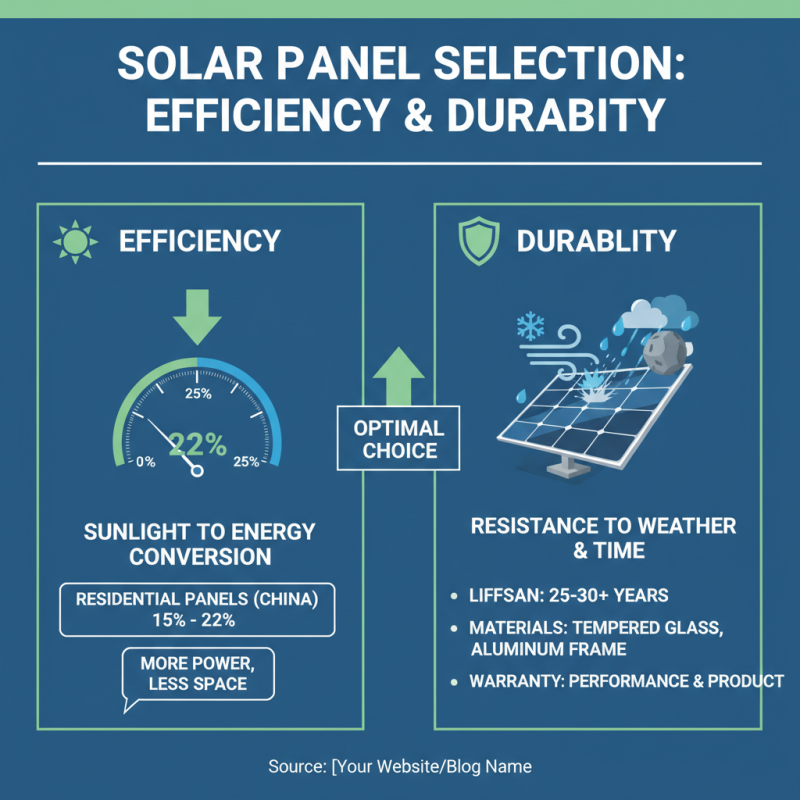
When considering the best residential solar panels in China, several key factors come into play. Efficiency is paramount. According to recent industry reports, top panels reach an efficiency of about 22%. Buyers must weigh this against their energy needs. Choosing a panel with higher efficiency can lead to better performance in limited space.
Cost also matters significantly. Data indicates that the average price of solar panels in China has decreased by nearly 30% in the last five years. While affordability is appealing, it's essential to consider the long-term benefits. Lower-cost panels may lack durability or efficiency, leading to increased costs over time. Prospective buyers should take time to evaluate warranties. A reliable warranty can indicate a company's confidence in its product’s lifespan.
Tip: Look for panels that offer a minimum 25-year warranty. This can reflect a manufacturer’s commitment to quality.
Another important aspect is the panel's temperature coefficient. This metric shows how much efficiency drops with rising temperatures. A lower coefficient means better performance in hot climates. Understanding these technical specifications can prevent costly mistakes.
Tip: Read customer reviews and case studies to gauge real-world performance. It’s beneficial to learn from others’ experiences before making a decision.
Best Residential Solar Panels in China for Global Buyers
This chart represents key factors influencing the choice of residential solar panels in China for global buyers. The attributes measured include efficiency, price per watt, warranty duration, temperature coefficient, and performance ratio. This data is crucial for making informed decisions when selecting solar panels.
Top Residential Solar Panel Manufacturers in China
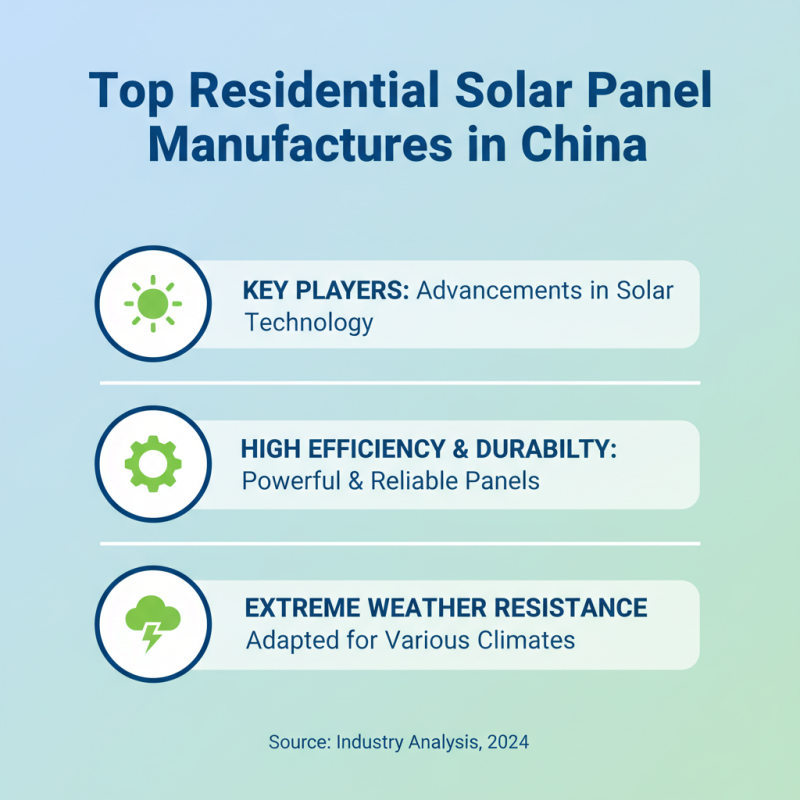
When exploring the top residential solar panel manufacturers in China, several key players stand out. These companies have made significant advancements in solar technology, ensuring high efficiency and durability. They focus on producing panels that are not only powerful but also reliable under various climate conditions. Buyers often seek materials that can withstand extreme weather, and these manufacturers have adapted their products accordingly.
Innovation is a strong point among these manufacturers. They invest in research and development, creating panels with enhanced energy conversion rates. However, some concerns arise about the consistency of quality. It's important for buyers to conduct thorough research before making a decision. Understanding the warranty terms and the company's customer service capabilities can be crucial.
Moreover, pricing varies widely in the Chinese market. While some manufacturers offer budget-friendly options, others cater to premium segments with advanced technologies. Buyers must weigh the benefits of investing in higher-priced panels against their energy needs and long-term goals. This careful assessment will lead to better choices in navigating the extensive landscape of solar energy in China.
Considerations for Global Buyers Purchasing Solar Panels in China
When considering solar panels in China, global buyers should take various factors into account. The manufacturing process and component quality are crucial. Inspect certifications and compliance with international standards. This ensures reliability and performance. It’s important to evaluate the supplier’s track record too. Experienced suppliers often provide solid warranties and customer support.
Price is another critical consideration. While lower costs can be appealing, they may indicate compromised quality. Investigate the materials used and the technology behind them. A thorough understanding of pricing helps avoid unexpected costs. Potential buyers should also consider installation and maintenance. Engage local experts to navigate these aspects effectively.
Buyers often overlook after-sale services. This can be a significant drawback. Establishing clear communication with the supplier about replacement parts and support is vital. Be wary of overly optimistic claims that may not materialize. A careful, informed approach can lead to a successful investment in solar energy.