Best Solar Panels for Your Home What You Need to Know?
As homeowners increasingly seek sustainable energy solutions, the market for solar panels for your home has expanded significantly. According to a recent report by the Solar Energy Industries Association, U.S. residential solar installations grew by 20% in 2022 alone. This surge highlights the growing importance of renewable energy in reducing electricity costs and carbon footprints. Experts emphasize that choosing the right solar panels can drastically impact your energy savings and environmental benefits.
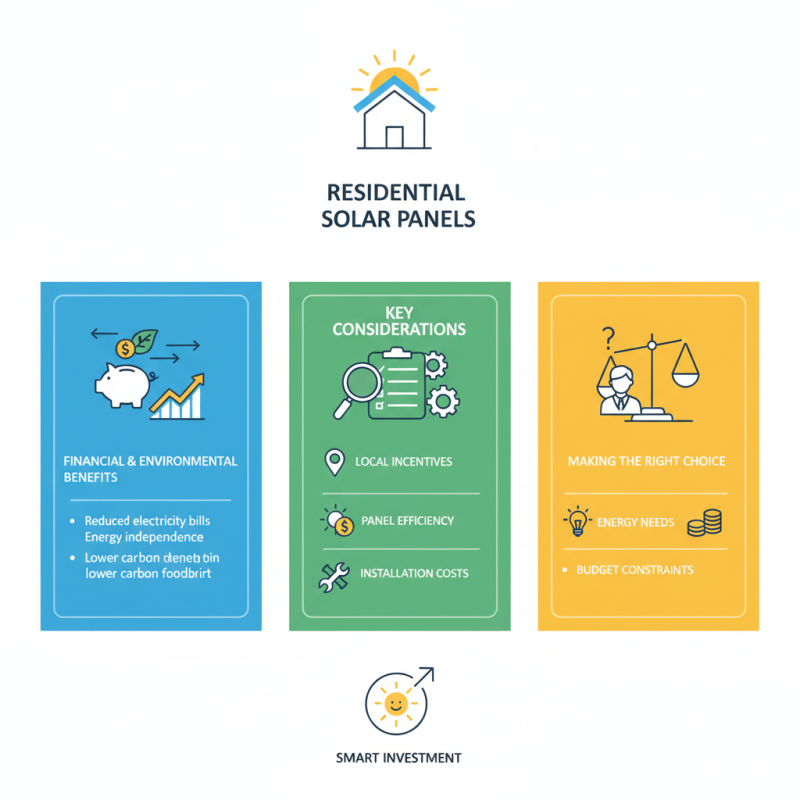
Tom Hsu, a leading expert in solar technology, states, “Investments in solar panels for your home not only bring financial savings but also contribute to a greener planet.” The decision to install solar panels requires careful consideration. Homeowners must evaluate local incentives, panel efficiency ratings, and installation costs. While many panels boast impressive warranties and lifespans, not all options are created equal. The challenges in finding the best solar panels for your home lie in aligning them with your specific energy needs and budget constraints. Thus, understanding the nuances of the solar market is crucial for a successful investment.
Best Solar Panels for Your Home: Understanding Efficiency Ratings
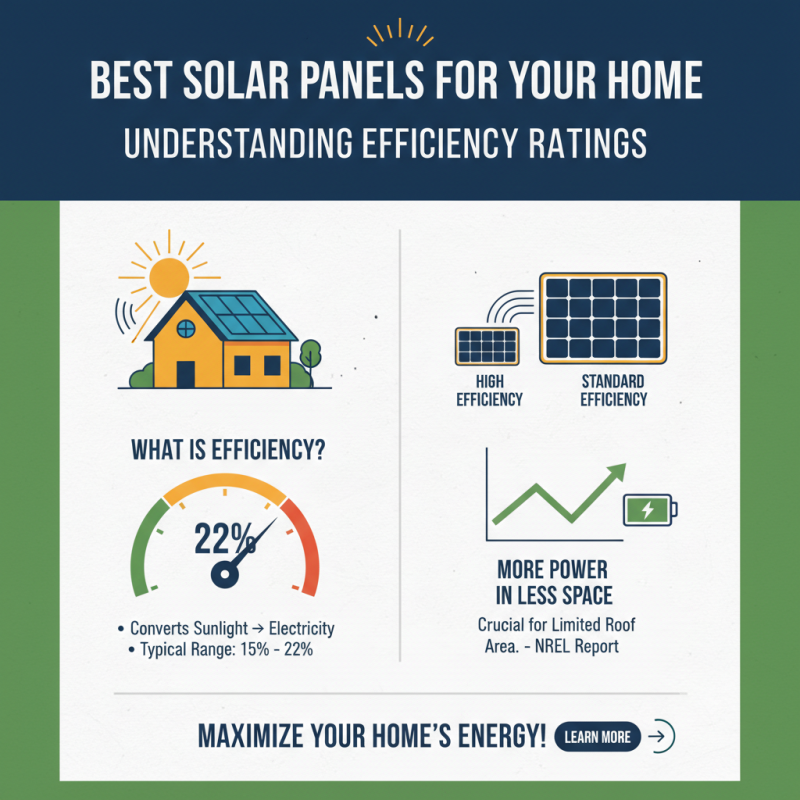
Understanding solar panel efficiency ratings is crucial for your home energy needs. Efficiency refers to how well a solar panel converts sunlight into usable electricity. Most panels today range between 15% to 22% efficiency. A report from the National Renewable Energy Laboratory shows that higher efficiency panels can generate more electricity in smaller areas. This is essential for homes with limited roof space.
However, focusing solely on efficiency might not be enough. A panel with a high efficiency rating can be more expensive. The initial investment needs careful consideration. Cost-effective panels may have lower efficiency, but they provide solid performance over time. Many homeowners find it challenging to balance efficiency, cost, and energy needs.
Real-world performance can also vary based on location and weather. For example, panels in sunny areas may outperform those in cloudy regions, regardless of efficiency ratings. Thus, choosing the best solar panels requires a holistic approach. Consider factors like installation, warranties, and local climate. It's a complex decision that benefits from thorough research and understanding.
Key Factors in Choosing Solar Panels: Cost, Durability, and Warranty
Choosing solar panels for your home involves several key factors. Cost is often the first consideration. While upfront installation may seem high, long-term savings on energy bills can offset this expense. Research and compare prices among different types of panels. They vary greatly in cost based on efficiency and technology.
Durability is another vital aspect. Solar panels face harsh weather conditions. It’s essential to choose panels that can withstand heavy winds and hail. Look for panels with a solid manufacturing process, ensuring they will last for decades. Remember that a longer lifespan means better value for your investment.
Warranty can be a game-changer in your decision-making. A strong warranty typically indicates a manufacturer's confidence in their product. Many companies offer warranties ranging from 10 to 25 years. Ensure you understand what the warranty covers, including performance and materials.
Tips: Always read reviews from other users. Real-life experiences can give insight into the panels' performance. Don't hesitate to ask for detailed specifications to clarify any doubts. Ultimately, making an informed decision will lead to a better investment for your home.
Best Solar Panels for Your Home: Key Factors in Choosing Solar Panels
Top Solar Panel Brands of 2023: Comparing Performance and Reliability
When choosing solar panels, performance and reliability are crucial factors. Some brands excel in energy efficiency. High-efficiency panels can produce more electricity from the same amount of sunlight. This means better savings on your electricity bills. Reliability ensures that your investment lasts for decades. Look for panels that come with long warranties. A 25-year warranty is a good sign of durability.
The market has various options, but not all brands are equal. Some panels may perform well initially but struggle over time. Research indicates that degradation rates vary significantly. Lower-quality panels can lose efficiency faster. It's essential to read independent reviews. Consider customer experiences related to long-term performance.
Installation also affects performance. Poor installation can lead to issues down the line. Make sure to hire experienced professionals. They understand how to maximize efficiency based on your roof's angle. Be cautious; flashy marketing doesn't always equate to top performance. Ultimately, making an informed choice requires thorough evaluation, balancing both performance and long-term reliability.
Installing Solar Panels: Professional vs. DIY Considerations
Installing solar panels can be a thrilling project. Many homeowners face a choice: hire a professional or go the DIY route. Each option has benefits and drawbacks. Hiring experts ensures quality installation and compliance with local regulations. However, it can be costly. DIY installations may save money but require extensive research and skill. Mistakes can lead to poor performance.
Consider your roof's condition. Is it sturdy enough for solar panels? You also need adequate sunlight exposure. If you're unsure, a professional evaluation might save you time and effort. Safety is another concern. Working on rooftops can be risky without proper training. Always prioritize your well-being.
Moreover, installation takes time. Understanding the equipment is essential. Research different types of panels and their efficiency rates. Keep in mind, installation requires patience and careful planning. Overlooking small details can lead to bigger issues. Reflect on your skills. Can you handle this project, or might it be wiser to hire a pro? Choose wisely; the decision affects your home for years to come.
Best Solar Panels for Your Home: What You Need to Know?
| Panel Type |
Efficiency (%) |
Cost per Watt ($) |
Warranty (Years) |
Ideal Use Case |
| Monocrystalline |
15-22 |
$0.80 - $1.50 |
25 |
Residential |
| Polycrystalline |
13-16 |
$0.70 - $1.00 |
25 |
Budget Installations |
| Thin-Film |
10-12 |
$0.50 - $0.90 |
20 |
Large Areas, Unconventional Roofs |
| Bifacial |
16-24 |
$1.00 - $2.00 |
30 |
High Performance in Solar Farms |