Why Choose Solar Power for Your Business Benefits and Savings?
Embracing solar power can transform the way businesses operate. In recent years, the demand for renewable energy sources has surged. According to the Solar Energy Industries Association (SEIA), solar power represents one of the fastest-growing energy sectors globally. In 2022 alone, the industry saw a 22% increase in installations compared to the previous year.
Industry expert Dr. Emma Green, a leading figure in solar energy research, emphasizes, “Transitioning to solar power isn't just an environmental choice; it’s a smart business strategy.” This sentiment reflects a growing trend where companies are not only seeking sustainability but also financial viability. Many businesses have reported substantial savings on energy costs, with some identifying a reduction of up to 75% in their monthly electricity bills.
Moreover, investing in solar power can enhance a company’s reputation. With consumers increasingly favoring eco-friendly practices, businesses adopting solar technology can attract a committed customer base. However, the journey is not without challenges. Initial costs and installation complexities can be hurdle for many. Nonetheless, the long-term benefits of solar power often far outweigh these obstacles, calling for thoughtful reflection and strategic planning.
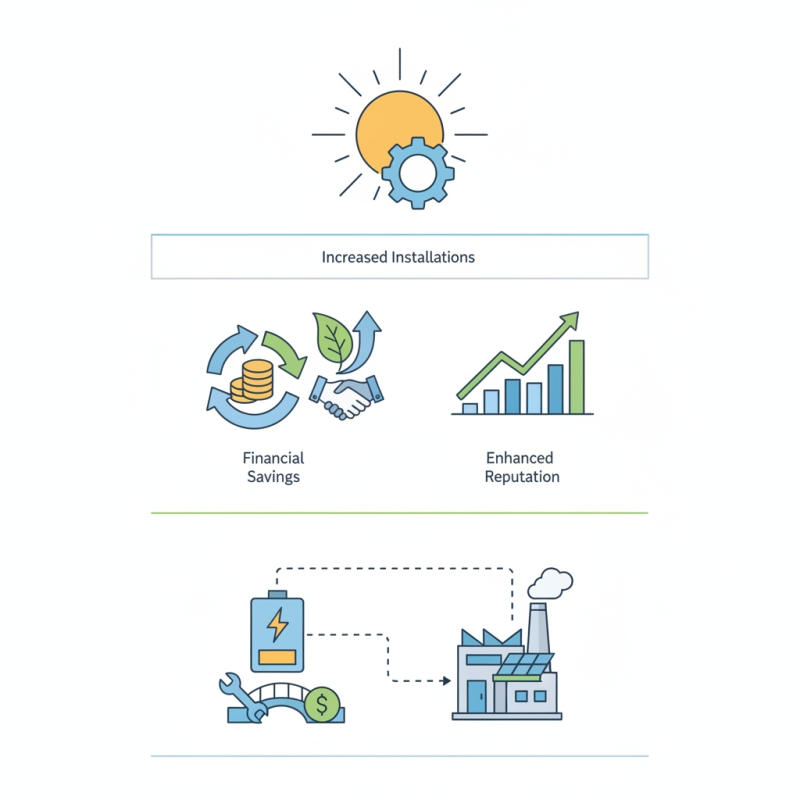
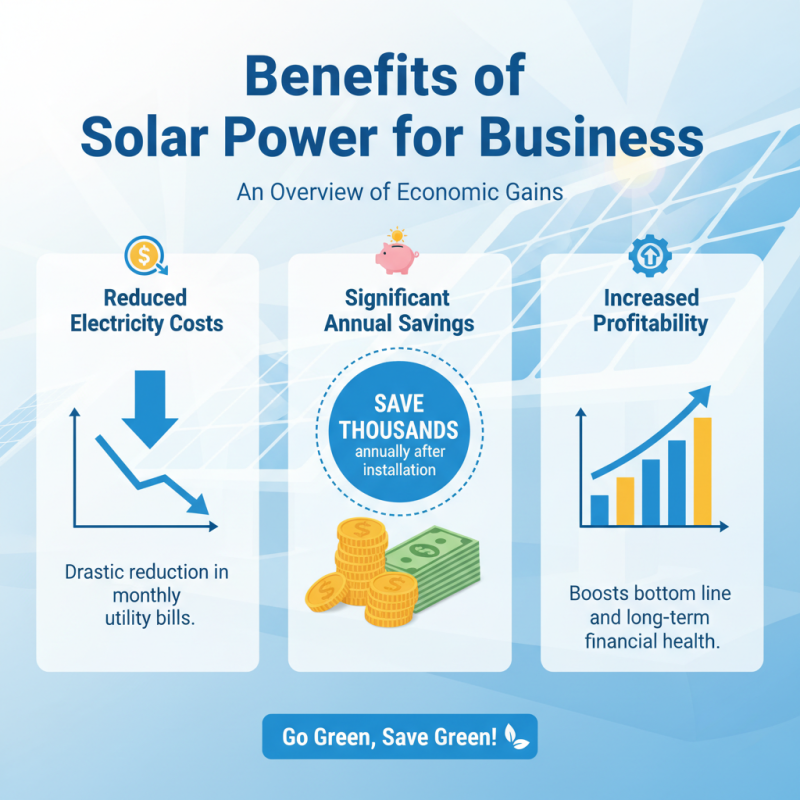
Benefits of Solar Power for Business: An Overview of Economic Gains
Solar power presents significant economic gains for businesses. Implementing solar energy can drastically reduce electricity costs. Many firms find they save thousands annually after solar installation.
The initial investment may seem daunting. However, government incentives and falling installation prices make it more accessible. Furthermore, solar systems can increase property values. Many studies show buildings with solar energy systems attract higher resale prices.
Choosing solar power also enhances a business's credibility. Sustainability can appeal to eco-conscious consumers. It may seem like a small step, but it fosters trust and loyalty. Tracking energy savings can be complicated. Yet, photos of solar panels or energy reports encourage better transparency. Balancing costs with savings is essential. Transitioning to solar requires proper planning, but the long-term benefits cannot be overlooked.
Cost Savings: How Solar Energy Reduces Business Operating Expenses
Businesses are constantly seeking ways to lower their operating costs. Solar power provides a viable solution. By harnessing the sun's energy, companies can significantly reduce their electricity bills. With a solar energy system, businesses can generate their own power. This independence from traditional energy sources can lead to substantial savings over time.
The initial investment in solar technology may seem daunting. However, many businesses discover that these costs pay off quickly. Solar energy systems often qualify for various incentives and tax breaks. This can mitigate the upfront expenses. Moreover, solar panels have low maintenance requirements. Once installed, they provide reliable energy for years.
Implementing solar power can sometimes have unforeseen challenges. For instance, cloudy days can affect energy production. Businesses need to consider energy storage options for such times. Additionally, every location has different regulations regarding solar energy systems. Navigating these can be tricky. However, with expert guidance, businesses can successfully transition to solar energy.
Environmental Impact: Solar Power's Role in Sustainable Business Practices
Solar power has become a crucial part of sustainable business practices. Companies can significantly reduce their carbon footprint by adopting solar energy. According to the International Renewable Energy Agency, businesses switching to solar can help reduce greenhouse gas emissions by an estimated 2.2 gigatons annually. This positive environmental impact is vital in combating climate change.
Adopting solar power also enhances a business's reputation. Consumers are increasingly favoring environmentally friendly brands. Research shows that 66% of consumers are willing to pay more for sustainable products. Being seen as a sustainable business can attract new customers and retain existing ones. However, not all companies have effectively communicated their sustainability efforts, leading to missed opportunities.
Tips for implementing solar power include conducting a feasibility study. Assess whether your location receives adequate sunlight and explore financing options available. Additionally, engaging your employees in sustainability initiatives can boost morale and teamwork. Regularly review the efficiency of your solar system to ensure maximum output. Embracing solar power is a journey that requires reflection and continuous improvement.
Why Choose Solar Power for Your Business? Benefits and Savings
This chart illustrates the potential benefits and savings from adopting solar power in a business setting. The data represents estimated annual savings, reduced carbon emissions, and increased sustainability across three key areas.
Government Incentives: Tax Benefits and Rebates for Solar Adoption
As businesses increasingly seek sustainable solutions, solar power emerges as a key player. Government incentives significantly enhance the financial appeal of solar adoption. These incentives often include tax credits and rebates, effectively lowering the upfront costs associated with installing solar systems. In the U.S., businesses can benefit from the federal Solar Investment Tax Credit (ITC), which allows up to 26% of the system costs to be deducted from federal taxes.
A recent report by the Solar Energy Industries Association (SEIA) highlighted that firms utilizing these incentives can recover their solar investments faster. For example, businesses can see paybacks within five to seven years, depending on system size and local energy costs. This short payback period is especially attractive during fluctuating energy prices.
Despite these advantages, some businesses remain cautious. Challenges include navigating the complex application processes for incentives. Inconsistent state policies can also pose hurdles. However, understanding these government incentives is crucial for making informed decisions. Ultimately, taking advantage of available solar incentives can lead to significant long-term savings and a stronger commitment to sustainability.
Why Choose Solar Power for Your Business Benefits and Savings? - Government Incentives: Tax Benefits and Rebates for Solar Adoption
| Incentive Type |
Description |
Estimated Savings |
Eligibility Criteria |
| Federal Investment Tax Credit (ITC) |
A tax credit based on the percentage of solar energy system costs. |
Up to 26% of system cost |
All businesses installing solar systems |
| Renewable Energy Certificates (RECs) |
Certificates representing the environmental benefits of solar energy production. |
Variable, depends on market |
Businesses generating solar power |
| State Tax Rebates |
Direct rebates provided by state governments to encourage solar installations. |
Up to $5,000 |
Varies by state and system size |
| Net Metering |
Allows solar users to sell excess energy back to the grid. |
Saves on energy bills |
Most states with solar programs |
| Property Tax Exemptions |
Exemptions on property taxes for solar installations. |
Varies |
Typically available in many states |
Return on Investment: Analyzing Long-term Financial Benefits of Solar Systems
When considering solar power, the return on investment (ROI) stands out as a crucial factor. Businesses often face high energy costs that eat into profits. Solar systems can help offset these costs significantly. By harnessing sunlight, companies can produce their own electricity. This reduces reliance on traditional energy sources and stabilizes expenses.
In the long run, solar installations can lead to substantial savings. Many reports indicate that businesses see ROI within a few years. After this period, the energy generated is almost free. Additionally, solar power systems often come with tax incentives and rebates that enhance financial returns. However, initial installation costs can be daunting for some organizations. It’s essential to analyze the total cost of ownership over time.
Decision-makers should also reflect on energy independence. While solar can offer great savings, it’s not a one-size-fits-all solution. Each business must evaluate its specific circumstances. The effectiveness of a solar system varies based on location, energy usage, and available sunlight. Regular assessments can provide insight into shifting energy goals and needs as well.