10 Best Solar Panels for Homes You Should Consider?
As energy costs rise, solar panels for homes are becoming increasingly popular. Homeowners seek sustainable solutions that reduce bills and environmental impact. Choosing the right solar panels can feel overwhelming.
Imagine basking in sunlight, knowing your energy comes from clean sources. The right solar panel system can save you money while contributing to a greener future. However, with countless options available, finding the best fit requires careful consideration. It’s easy to overlook crucial factors like efficiency, warranty, and aesthetics. Mistakes can lead to dissatisfaction down the road.
This article highlights ten best solar panels for homes that deserve your attention. These selections represent quality, performance, and value. As you explore these options, reflect on what matters most to you and your energy needs. Each choice tells a story about sustainability and innovation, but you must find the right one for your circumstances.
Factors to Consider When Choosing Solar Panels for Your Home
When choosing solar panels for your home, several factors deserve attention. Start with efficiency, which indicates how much sunlight a panel converts into usable energy. Higher efficiency means more electricity from less space. This is key for homes with limited roof area.
Another important aspect is durability. Panels face weather, dust, and debris. Select panels designed for local climates. This could mean more investment, but long-lasting panels can save money over time. Additionally, consider warranties. A longer warranty often reflects a manufacturer’s confidence.
Price is always a concern. Balance initial costs with potential savings on energy bills. Research if incentives or rebates are available in your area. Installation costs also vary. Verify that the installation is done properly to avoid future issues. Reflect on the bigger picture. Choosing solar panels is not just a financial decision, but an environmental one too.
10 Best Solar Panels for Homes You Should Consider
This chart displays the efficiency rates of different solar panel technologies to help you make an informed decision when choosing solar panels for your home.
Top 10 Solar Panel Brands Renowned for Quality and Performance
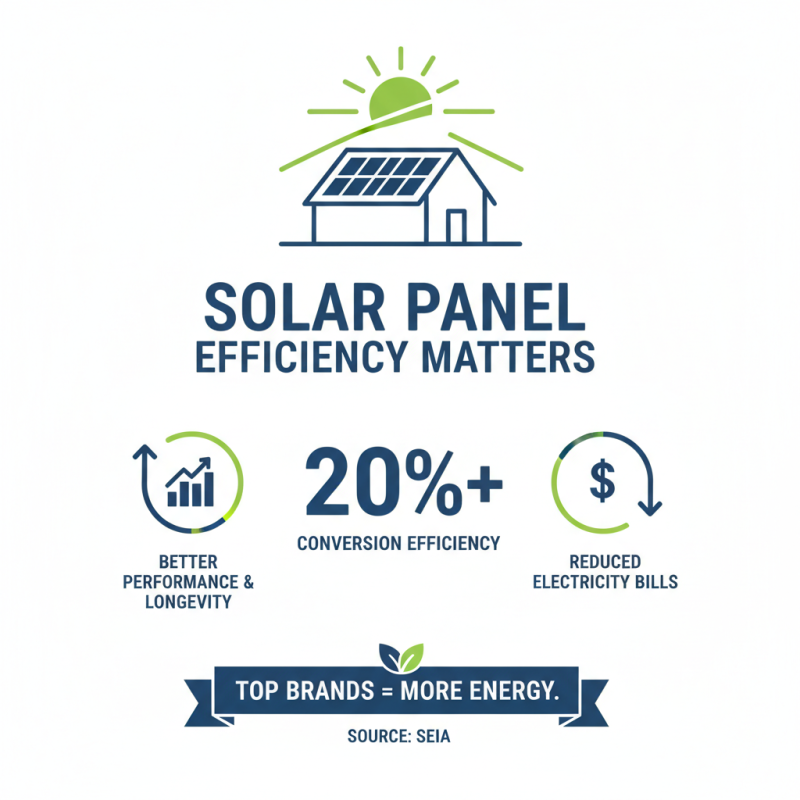
When considering solar panels for your home, brand reputation plays a crucial role. Studies indicate that top solar panel brands typically offer better performance, longevity, and efficiency. According to the Solar Energy Industries Association (SEIA), reputable brands often yield a conversion efficiency of over 20%. This efficiency translates to more energy generated and reduced electricity bills over time.
Quality is paramount in solar technology. Panels from renowned manufacturers often undergo rigorous testing, ensuring durability against weather conditions. Reports suggest that the best brands focus on product warranties lasting 25 years or more. However, not all top-rated panels maintain consistent performance. Some may decline in output efficiency sooner than expected, prompting homeowners to assess their options carefully.
Moreover, installation and post-installation service are critical factors. A lesser-known brand might surprise you with lower installation costs but could lack customer support later. Homeowners should always dig deeper, reading reviews or seeking expert opinions. This research could unveil hidden issues, emphasizing the importance of a well-informed decision in a market flooded with varying options.
Comparative Analysis of Efficiency Ratings Among Solar Panel Types
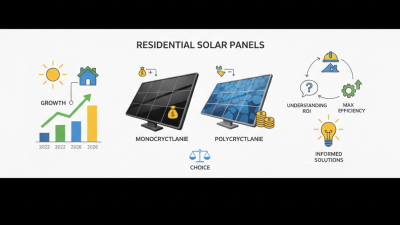
When considering solar panels, efficiency ratings play a crucial role. These ratings indicate how much sunlight a panel can convert into usable electricity. Typically, solar panels fall into three main categories:
monocrystalline,
polycrystalline,
and
thin-film. Each type has its unique attributes and drawbacks that homeowners should carefully evaluate.
Monocrystalline panels are often praised for their high efficiency. They can reach efficiency ratings above
20%. However, they can be more expensive than other types.
Polycrystalline panels are a more budget-friendly option. Their efficiency typically ranges from
15% to
17%. While they are less efficient, they still perform well in various conditions.
Thin-film panels are lightweight and flexible. They generally have the lowest efficiency ratings, around
10% to
12%. But they may be suitable for specific applications or installations.
It's essential to consider these factors in the context of your home. The optimal choice depends on your budget, the roof's orientation, and local sunlight conditions. Choosing a panel with a high efficiency rating may sound ideal, but higher efficiency doesn't always mean better overall performance. Reflect on your needs and energy goals before making a decision.
Installation and Maintenance Considerations for Home Solar Panels
Installing solar panels at home is a significant decision. Many homeowners think about the initial costs but overlook long-term maintenance. According to a report by the National Renewable Energy Laboratory, up to 90% of a solar panel's performance diminishes due to poor maintenance. Regular cleaning is essential. Dust, debris, and bird droppings can reduce efficiency by as much as 25%.
Another important consideration involves permits and local regulations. Some areas have strict codes for solar installations. These regulations can delay projects. Additionally, the installation cost may vary widely based on location. The U.S. Energy Information Administration suggests that average installation prices have fallen by nearly 40% over the last decade, but regional differences still exist.
Homeowners should also be aware of potential warranty issues. Most solar panels come with a warranty that lasts 20-25 years. However, some components, like inverters, may need replacement sooner. It's crucial to investigate these details before installation. Ultimately, understanding both installation and maintenance can lead to a more successful solar energy system.
Cost-Effectiveness of Solar Panels: Long-Term Savings and Incentives
Choosing solar panels for your home is a significant decision. The cost-effectiveness of solar systems often appears immense. A report from the National Renewable Energy Laboratory shows that homeowners can save an average of $20,000 over 20 years. This figure varies based on location, initial costs, and energy consumption.
Various incentives can also impact affordability. Many states offer tax credits, rebates, or grants. For instance, the Federal Investment Tax Credit (ITC) allows homeowners to deduct 26% of installation costs from their federal taxes. Still, these incentives fluctuate based on legislation. A homeowner may miss out if they wait too long to install. It’s important to research local policies closely.
Despite the savings, some challenges exist. Initial costs can deter potential buyers. According to a survey by the Solar Energy Industries Association, 30% of homeowners cite price as a major barrier. Yet, financing options like loans and payment plans exist to ease this burden. Understanding these complexities is essential before making a commitment.