Top 10 Benefits of Lithium Battery Cars for Eco-Friendly Driving
The rise of the Lithium Battery Car symbolizes an evolving approach to sustainable transportation. As global emissions climb, the auto industry faces pressing challenges. According to the International Energy Agency, electric vehicle sales, predominantly lithium-based, surged by 143% in 2020. This significant shift highlights a growing consumer preference for eco-friendly options.
Lithium battery cars play a crucial role in reducing our carbon footprint. They produce zero tailpipe emissions and are vital to achieving climate goals. In the U.S., a study from the Union of Concerned Scientists states that electric cars emit half the greenhouse gases of gasoline cars over their lifespan. However, challenges exist. Battery production still poses environmental risks, and the extraction of lithium can be complex.
Despite these issues, lithium battery cars show immense promise. They propel us towards cleaner air and sustainable energy. As we navigate this transition, it’s essential to weigh both benefits and drawbacks. Embracing innovation requires careful consideration and a balanced approach to truly drive a greener future.
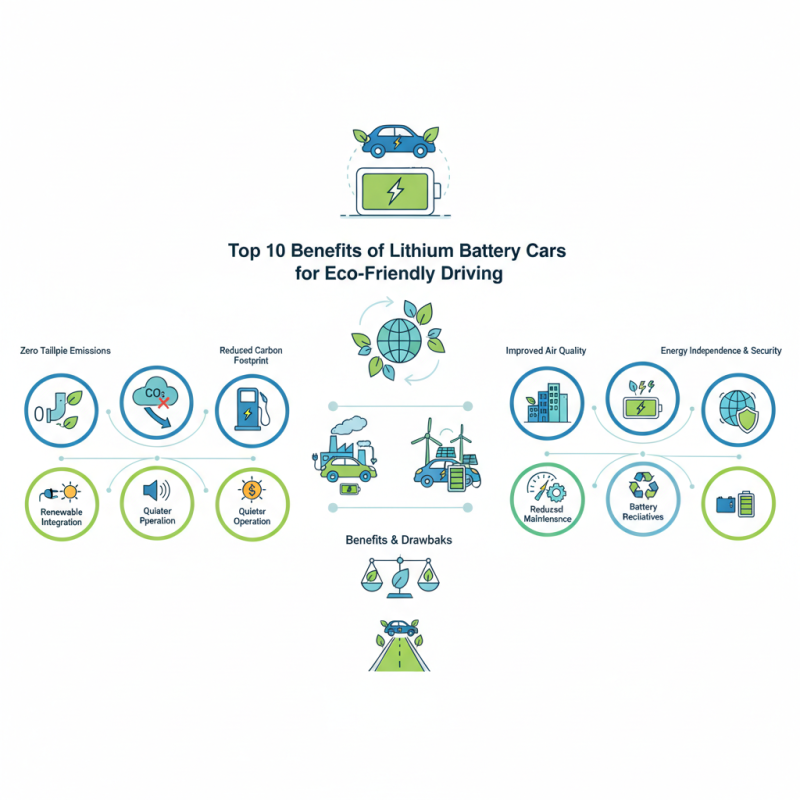
Benefits of Lithium Battery Cars in Reducing Greenhouse Gas Emissions
Lithium battery cars play a significant role in reducing greenhouse gas emissions. These vehicles produce zero tailpipe emissions, which helps to improve air quality. Unlike traditional combustion engines, electric motors rely on energy stored in batteries. This shift leads to cleaner streets and healthier cities.
Driving a lithium battery car can significantly lower your carbon footprint. Even when considering electricity generation, these cars typically emit less pollution than gasoline vehicles. Renewable energy sources can charge batteries, enhancing the environmental benefits. However, the production of lithium batteries does have ecological impacts. Mining practices can harm local ecosystems and water supplies.
Tips: Consider using public transportation or carpooling to further reduce emissions. Charging your car using renewable energy sources, like solar or wind, effectively enhances its green credentials. Be conscious of the battery’s life cycle; recycling is crucial. Make informed choices and think about the bigger picture. Balancing convenience with eco-friendliness requires ongoing reflection and action.
Lithium Battery Efficiency: Energy Density and Range Comparisons in EVs
Lithium batteries are revolutionizing the electric vehicle (EV) market. Their high energy density allows for longer driving ranges. Many models can travel over 300 miles on a single charge. This range is comparable to traditional vehicles using gasoline. Consumers appreciate the freedom to take long trips without frequent stops.
Charging times have improved significantly too. Many lithium battery cars can recharge in under an hour at fast-charging stations. This convenience makes them more appealing to drivers. However, challenges remain. Not all charging infrastructure is equal, and drivers can face long wait times in busy areas.
The environmental impact of lithium batteries is noteworthy. While they produce fewer emissions during use, battery production comes with its own concerns. Mining lithium has environmental consequences. Responsible sourcing is crucial for sustainability. As the market grows, we must address these challenges head-on. Balancing the benefits and drawbacks of lithium battery cars is essential for eco-friendly driving.
Cost-Effectiveness of Lithium Battery Cars: Savings on Fuel and Maintenance
Lithium battery cars bring significant cost savings for eco-friendly drivers. The most noticeable saving comes from fuel. Electric vehicles (EVs) powered by lithium batteries are much cheaper to "fuel" than traditional gas cars. Charging at home can average $1.20 per gallon equivalent. This drastically reduces monthly expenses.
Maintenance costs are also lower. Lithium batteries require less upkeep than combustion engines. With fewer moving parts, drivers spend less on oil changes, belts, and other engine-related repairs. Over time, these savings add up, allowing for budget-friendly ownership.
Tip: Consider using renewable energy sources, like solar, to charge your lithium battery car. This further reduces costs and carbon footprints.
The initial purchase price may seem high for some models. However, tax incentives and rebates can help offset that cost. Research local programs that offer discounts or benefits for eco-friendly vehicles.
Tip: Keep an eye on battery performance. Maintaining the right charging habits can extend battery life, ensuring longer savings. Avoid deep discharges to maximize longevity.
Top 10 Benefits of Lithium Battery Cars for Eco-Friendly Driving
| Benefit | Description | Cost Savings per Year | Maintenance Savings per Year |
| Reduced Emissions | Lithium battery cars produce zero tailpipe emissions. | $0 | $200 |
| Lower Fuel Costs | Electricity costs less than gasoline on a per-mile basis. | $900 | $150 |
| Government Incentives | Many states offer tax credits and rebates for electric vehicle purchases. | $2,500 | N/A |
| Lower Maintenance Costs | Fewer moving parts lead to less wear and tear. | $100 | $300 |
| Regenerative Braking | Energy is recaptured during braking, improving efficiency. | $150 | N/A |
| Home Charging Stations | Convenience of charging at home compared to fueling at gas stations. | $300 | N/A |
| Longer Lifespan | Lithium batteries have a longer life than conventional batteries. | $0 | $400 |
| Performance | Electric cars offer instant torque and smooth acceleration. | N/A | N/A |
| Quieter Operation | Electric vehicles operate with less noise than gas engines. | N/A | N/A |
| Energy Independence | Reduces reliance on fossil fuels and foreign oil. | N/A | N/A |
Impact of Lithium Battery Technology on Renewable Energy Integration
Lithium battery technology plays a crucial role in renewable energy integration. As electric vehicles (EVs) gain popularity, this synergy becomes more evident. In 2020, renewable energy sources accounted for roughly 29% of global electricity production. Lithium batteries enhance this by enabling energy storage, allowing for efficient use of solar and wind power.
However, challenges remain. One concern is battery disposal and recycling. Reports show that only 5% of lithium-ion batteries are recycled effectively. This leads to environmental risks and resource waste. Additionally, lithium mining has significant ecological impacts. The extraction process can disrupt local ecosystems, causing harm to plant and animal life.
On the positive side, lithium batteries improve energy efficiency. Data indicates that EVs can convert over 60% of electrical energy from the grid to power at the wheels. This is much higher than traditional combustion engines, which convert only about 20%. As battery technology evolves, the integration of renewables will strengthen, yet sustainability must remain a priority.
Advancements in Recycling Lithium Batteries for Sustainable Automotive Solutions
Advancements in recycling lithium batteries are transforming the automotive landscape. With growing concerns about environmental impact, efficient recycling methods have become vital. Companies are developing processes to recycle lithium-ion batteries, which are commonly used in electric vehicles. These efforts aim to reclaim valuable materials and reduce waste.
Despite these advancements, challenges remain. Many recycling technologies are still not widely adopted. Some batteries end up in landfills, causing potential environmental hazards. The need for infrastructure to support these recycling initiatives is crucial. Additionally, public awareness about the importance of recycling is often lacking. Encouraging responsible disposal of batteries can make a significant difference.
Innovative projects across various regions are pushing boundaries. They focus on creating closed-loop systems that use recycled materials to produce new batteries. This practice helps mitigate resource extraction. It promotes a more sustainable future for electric vehicles. Moving forward, more investment is needed in both technology and education to achieve lasting change.